

Foods That Are Not Ideal for Air Fryer Cooking
Air fryers rely on rapid circulation of hot air to cook food, which means not every ingredient responds well to this method. Foods that are very wet, extremely light, or require deep liquid cooking often struggle in an air fryer because the airflow either disrupts the food’s structure or fails to produce the intended texture. Understanding these limitations helps avoid disappointing results and potential mess.
Battered foods are a common example. Wet batters, such as those used for tempura or beer-battered fish, tend to drip through the basket before setting, leading to uneven cooking and residue buildup rather than a crisp coating. Similarly, foods with loose toppings like shredded cheese or breadcrumbs can be blown around by the circulating air, causing burning or uneven melting.
Leafy greens and very lightweight ingredients also present challenges. Items like spinach or kale chips can dry out too quickly or be lifted by airflow, resulting in scorching or inconsistent cooking. While some vegetables adapt well to air frying, delicate greens often perform better with slower, more controlled heat methods.
Dishes that depend on simmering or boiling, such as soups, stews, pasta, or rice cooked in liquid, are not suitable for air fryers because the appliance is designed for dry heat rather than contained moisture. In these cases, appliances that support pressure cooking or slow cooking provide a more appropriate environment for liquid-based recipes.
For cooks who want flexibility across different food types, multi-function appliances like the NuWave Duet Electric Pressure Cooker & Air Fryer Combo
offer alternative cooking modes that handle foods unsuitable for air frying. By switching between air frying, pressure cooking, or slow cooking, users can choose the method that best matches the food’s texture and moisture requirements.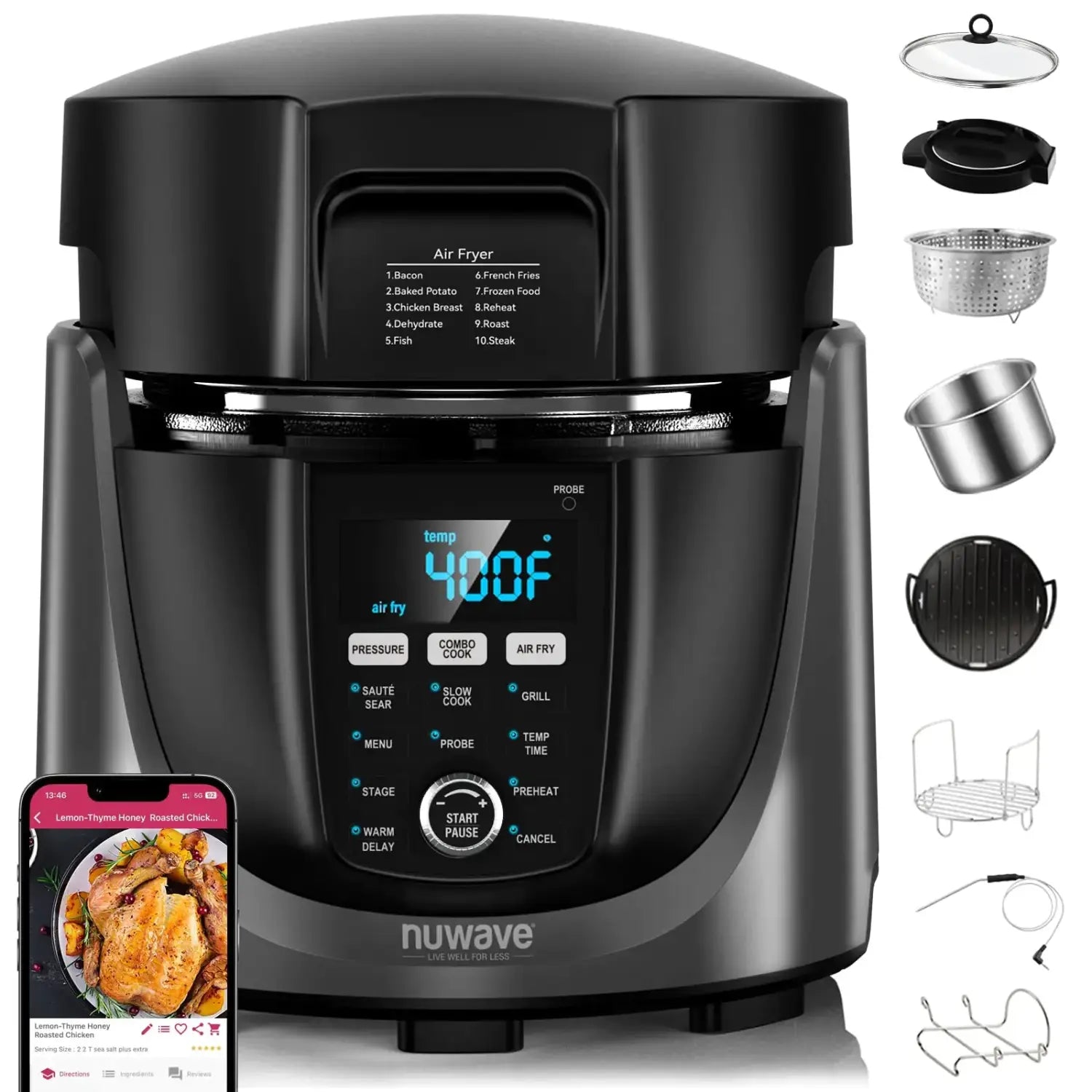
In general, foods that require stable liquid environments, heavy batters, or very delicate structures tend to be poor candidates for air fryers. Recognizing these limits allows home cooks to use air fryers where they excel — crisping, browning, and reheating — while relying on other methods for dishes that demand moisture control or gentle heat.


