Basketball Jump Fitness: Resistance Bands for Stronger Legs
Basketball Jump Fitness: Resistance Bands for Stronger Legs
If you’re chasing a higher vertical and quicker footwork, you don’t need an expensive gym full of machines. A compact, versatile tool can transform your training right at home. Our Basketball Jump Fitness Equipment with Resistance Bands is designed to build leg power and stability, using high-quality latex bands that stand up to tough workouts. With a length of 40 cm and four resistance levels, this multifunctional band helps basketball players of all levels push their training further while keeping your space neat and affordable.
Why jump training matters for basketball players
Vertical leap and explosive leg strength are game changers on the court. Jump-focused routines improve your takeoff power, landing control, and agility, which translates to better rebounding, faster transitions, and more consistent shooting rhythm. Resistance bands add a controlled resistance to movements, forcing your muscles to work harder through the entire range of motion. This kind of training is especially valuable for players who want progressive overload without heavy weights in a crowded gym.
Choosing the right equipment for home basketball training
If you’ve ever wondered where to buy exercise gear locally, you’re not alone. Exercise equipment stores near me often carry a mix of gear, from basic resistance bands to more specialized tools. For many shoppers, options at big retailers like Walmart cover essential items, but the true value comes from gear that’s built for durability and specific use cases—like a 40 cm latex resistance band designed for leg workouts and basketball-specific drills.
If you’re considering used exercise equipment for sale to save money, be mindful of band elasticity and stitching, since a worn band won’t provide reliable resistance and could risk injury. The goal is a setup that’s both affordable and dependable for long-term training.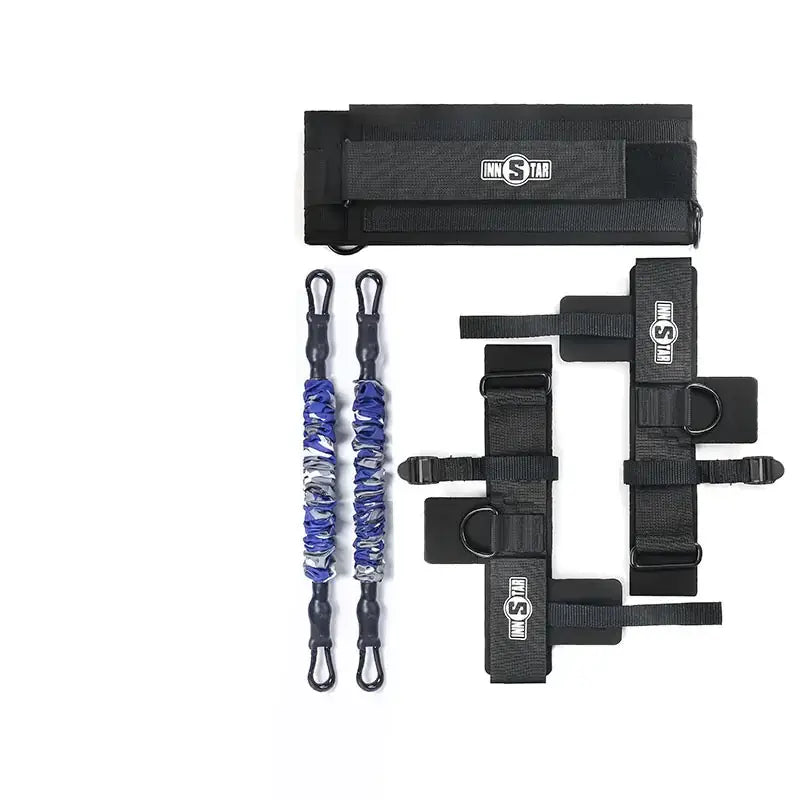
Four resistance levels, four steps of progress
Our 40 cm resistance bands come in four levels. This setup makes it easy to start with a lighter load and gradually increase intensity as you grow stronger. Whether you’re rebuilding after an off-season break or chasing a new personal best, the ability to dial in resistance helps you tailor workouts to your current fitness level. For those setting up a home gym, this range also means you can rotate between intensity levels across different drills without buying multiple distinct bands.
How to use the 40 cm band for basketball jump training
Start with a light warm-up that primes your hips, ankles, and calves. Then select a resistance level to match your effort. The short length keeps tension tight through the range of motion, which is ideal for precision work and ankle stability. Below are practical exercises that target jump mechanics and leg power.
- Band-resisted squat jumps: Stand with feet shoulder-width apart, band under your feet and looped around your hands or shoulders to create tension. Perform quick, explosive squats, focusing on a strong takeoff and soft landings. Maintain a tall chest and engaged core.
- Calf raises with band tension: Stand on the band with the midfoot, heels hanging off the edge if possible. Rise onto your toes with controlled tempo, then lower slowly. Higher resistance levels add extra tension for calf strength and ankle stability.
- Lateral bound drills: With the band providing side-to-side resistance, push off one leg and glide to the other side. This motion improves lateral quickness and cutting power, both valuable for defending and driving to the basket.
- Hip hinge and jump taps: Hold the band at hip level, hinge from the hips while keeping your back straight, then explode into a small jump. This drill trains hip drive and landing mechanics essential for consistent jump height.
These exercises are designed to be simple enough for a home setup while still delivering meaningful gains. Start with one or two sets of 6–8 repetitions per exercise, then progress to 3 sets as your conditioning improves. If you’re balancing basketball skills with general fitness, you’ll find this band a reliable companion for leg day, plyometrics, and core work.
Integrating jump-band training into a weekly routine
Consistency is key. A typical plan might look like this: two to three short jump-focused workouts (20–30 minutes) per week, interspersed with lighter cardio or mobility work on alternate days. On days you don’t jump, you can still benefit from band-resisted lower-body movements—think banded squats, hamstring curls, and glute activation drills. The compact gear makes it easy to slot in sessions before or after practice, or during a quick home workout window between classes or work.
Where to buy and selecting the right home workout gear
When you shop for home workout essentials, you’ll encounter a range of options. If you’re aiming for quality, durability, and a product designed for basketball-focused leg training, this resistance band is a thoughtful choice. If you’re evaluating options at retailer sites or marketplaces, compare latex quality, stitching integrity, and length compatibility with your training space. For shoppers exploring the idea of new versus used equipment, remember that new bands usually come with warranties and consistent performance, while used bands require careful inspection for cracks or elasticity loss—especially important for 40 cm bands used on multiple high-intensity drills.
What makes a good home workout setup for basketball training
Beyond a single band, the best home setups include a mix of mobility work, strength work, and plyometrics. A small space-friendly anchor band, a few resistance bands of varying lengths, and a reliable mat can unlock a wide range of drills. When you pair the right gear with a simple, consistent routine, you’ll maximize your time, stay injury-free, and steadily improve your vertical leap and on-court control. If you’re comparing options like commercial fitness equipment versus compact home gear, remember that the most effective system is the one you actually use regularly. A budget-friendly, high-quality band can outperform clunkier, less practical equipment that sits unused in a corner.
Maintenance and safety tips
Inspect your resistance bands regularly for signs of wear, especially around the loops and stitching. Clean your bands with a mild soap solution and air-dry to prevent drying and cracking. Store them away from direct sunlight and sharp objects that could nick the latex. If you experience pain or unusual joint stress during a drill, scale back intensity and consult a trainer or therapist. Safety first keeps training enjoyable and sustainable over the long term.
Conclusion: Invest in a flexible piece of training for basketball success
The Basketball Jump Fitness Equipment with Resistance Bands is a practical tool for players who want to elevate their leg power, foot speed, and jump mechanics without a full gym. Its compact size, durable latex construction, and four resistance levels provide scalable training that adapts to your progress. Whether you’re refining your post-game rebound or building a robust foundation for season-long performance, this band supports steady growth with every session.